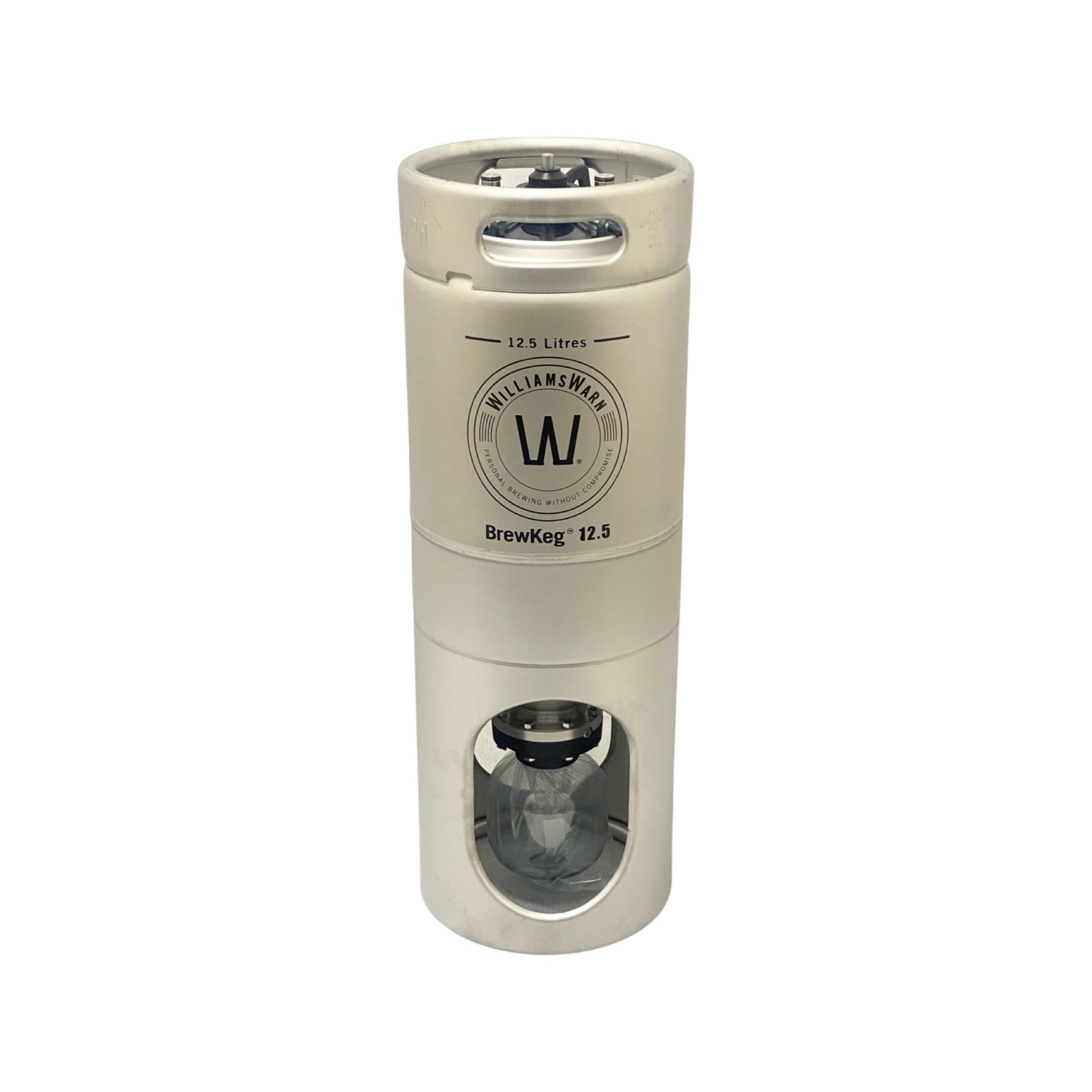
BREW + SERVEWhat is a BrewKeg?
The pressure-fermenting vessel. Add the ingredients here, let the drink ferment and naturally carbonate, then crash cool it. You can pour from it directly or transfer the finished drink.
 SETUPADVISOR
Put in around 20–30 minutes of hands-on work for a typical brew, then let the WilliamsWarn system ferment, naturally carbonate and clarify it. See what you can make, how much you could save and which setup suits you.
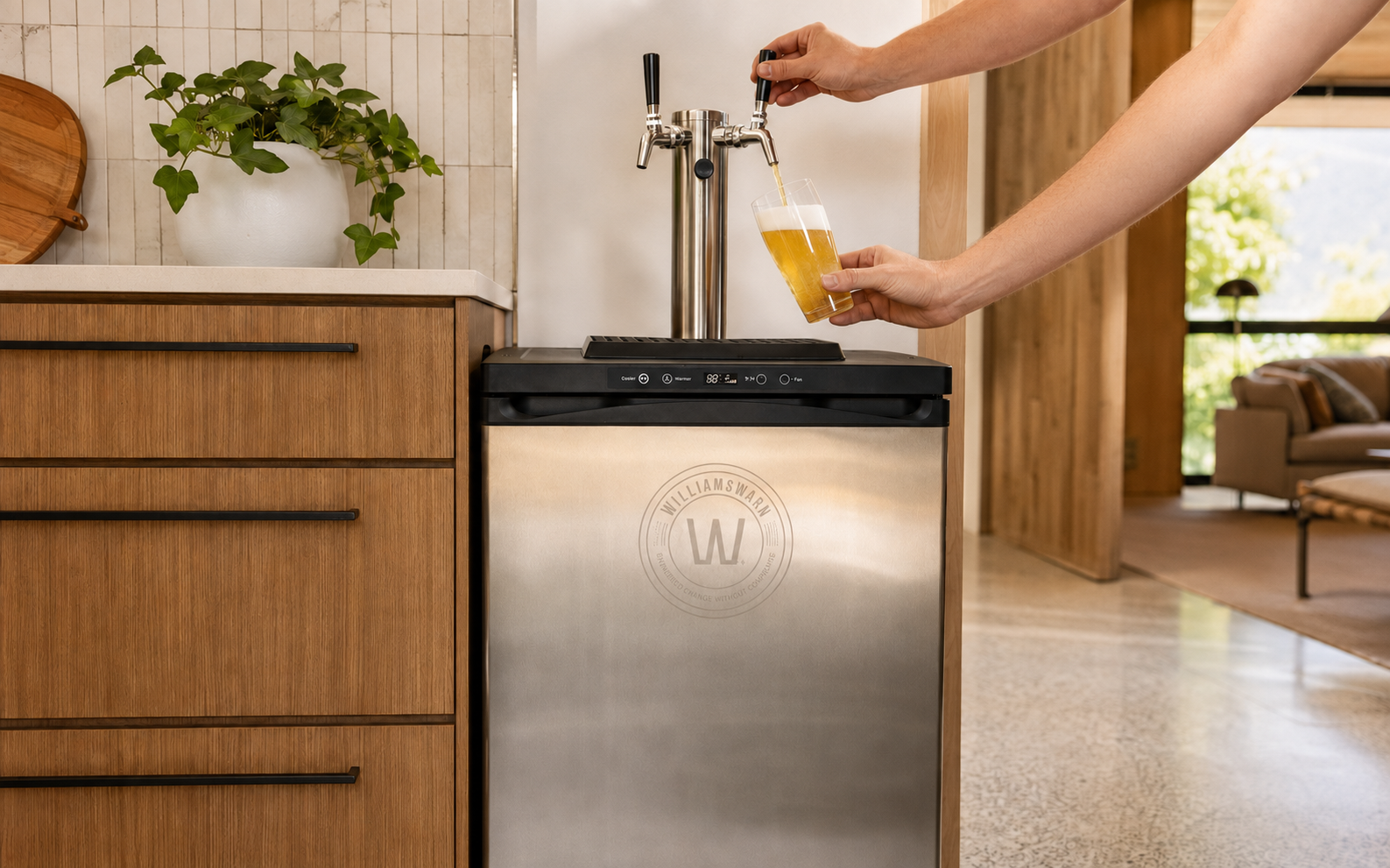
Brew the beer or other drink in the BrewKeg. Pour it straight from there, or transfer the finished drink into a Corny keg or bottles so the BrewKeg is free to start the next brew.
The pressure-fermenting vessel. Add the ingredients here, let the drink ferment and naturally carbonate, then crash cool it. You can pour from it directly or transfer the finished drink.

A serving and storage keg. It holds finished brews, or mixed drinks such as lemonade and premixes. It does not ferment the drink; external CO₂ carbonates and pours it.
1 / 5Start with fresh, high-quality beer, then go well beyond it. Brew under pressure in the BrewKeg, and use Corny kegs for mixed drinks you want kept cold, carbonated and ready on tap.
Lagers, pale ales, IPAs, stouts and more
Around 7 daysCrisp apple cider, medium-sweet or dry
From 4 daysLight, refreshing honey drinks — closer to an RTD
Around 10 daysClean, sparkling and ready for your own flavours
Recipe dependentDry, sweet, spicy or citrus-led
Recipe dependentStill or sparkling recipes made under pressure
Recipe dependentMix in a Corny keg, chill and connect external CO₂
Carbonate overnightSparkling water, mixers and your own zero-alcohol recipes
Carbonate overnightAdd pre-made spirits to your mixer and keep it on tap
Carbonate overnightMake beer, cider, alcoholic ginger beer, session mead, hard seltzer, wine and your own fermented recipes. Pressure fermentation generates the CO₂ needed to carbonate the drink.
Mix lemonade, cola, ginger ale, sparkling water or other non-alcoholic drinks. Add pre-made vodka, gin or rum for your own premix, connect CO₂ and leave it chilled overnight.
Allow around 20–30 minutes to clean the keg, add the ingredients and get a typical brew underway. It can take a little longer depending on your setup, but once the ingredients are in, the system does the fermenting and carbonating.
A BrewKeg and Corny keg take roughly the same amount of time to clean.
Add the ingredients and water, connect everything and get the drink underway.
The drink ferments and carbonates in the BrewKeg. When it is finished, adding BrewClear is a quick, couple-minute manual job before the keg is chilled.
Medium sweetness from four days; leave it longer for a drier finish.
High-quality beer, fermented, carbonated, clarified and ready to pour in around a week.
A light, modern honey drink rather than a heavy traditional mead.
Timing varies with ingredients, strength and the finish you want.
Always confirm fermentation is complete from the recipe and gravity reading before chilling or serving.
Put the ingredients into a Corny keg, connect CO₂ and leave the keg cold while the drink carbonates. This keeps the BrewKeg free for the next fermented drink.
Put a small amount of hot soapy water in a Corny keg, pressurise it and push it through the drink lines and taps.
WilliamsWarn ingredient kits can produce high-quality beer for far less per drink than buying bottles or cans—and the gap is even bigger compared with a pint at a pub or restaurant.
An estimate only. Actual yield and cost vary by recipe, wastage, gas use and how you serve. Equipment prices shown are a snapshot and should be confirmed on the linked product page.
Choose a setup for your volume and routine, see the expected cost per drink, and finish with an editable equipment quote.